Why Are There So Many Wasps This Summer in the UK?
If your garden has turned into a wasp free-for-all this July, you’re not imagining it. Gardens, bins and picnic tables across the country have seen a sharp rise in wasp activity, and there’s a clear set of reasons behind it. Understanding what’s driving the numbers up helps you deal with a nest properly, rather than just swatting and hoping for the best.
A mild spring gave queens a head start
Wasp colonies begin with a single queen who survives the winter in a sheltered spot, such as a shed, loft or log pile. She wakes in spring, feeds up, and starts building a small paper nest, laying the first batch of worker eggs. When spring weather stays mild and dry, more queens survive hibernation, and they emerge earlier than usual. That early start matters enormously. A queen who begins building in March instead of April gives her colony an extra few weeks of growth before summer even arrives. By July, that head start can mean a nest with hundreds more workers than you’d expect in a cooler year.
Warm, dry summers speed everything up
Wasps are cold-blooded, so temperature controls how fast they develop and how far they travel to forage. A warm, settled summer keeps workers out searching for food for longer each day, and it speeds up the rate at which new workers hatch inside the nest. Dry weather also plays a part. Wasps need water to build their papery nests, mixing wood fibre with saliva, so a dry summer often pushes them towards houses and gardens where taps, bird baths, and damp bins offer a reliable source. Put a warm spring together with a dry summer, and you get colonies that grow bigger, faster, and forage more aggressively than usual.
Late summer changes their behaviour, not just their numbers
There’s another factor that catches people out every year, and it has nothing to do with population size. From late July into August, wasp colonies stop producing new workers and start rearing next year’s queens. Once that happens, the worker wasps lose their job. For most of the summer, workers spend their time collecting insects to feed the growing larvae. The larvae reward them with a sugary secretion. When the colony stops producing larvae, that sugar supply dries up, and the workers go looking for sweetness elsewhere. That’s when they turn up around your drink, your ice cream, or the bin outside a café. The wasps haven’t multiplied overnight. They’ve simply run out of their usual food source and started hunting for sugar wherever they can find it.
Fewer natural predators and more food waste
Garden birds, certain insects, and small mammals all prey on wasps, but populations of some of these predators have dropped in built-up areas. At the same time, outdoor dining, food waste bins, and compost heaps give wasps an easy, constant food supply in towns and cities. A nest built near a row of restaurant bins or a busy back garden has far less competition for food than one built somewhere more rural, and it can grow to an unusually large size as a result.
How to tell if you have a genuine problem
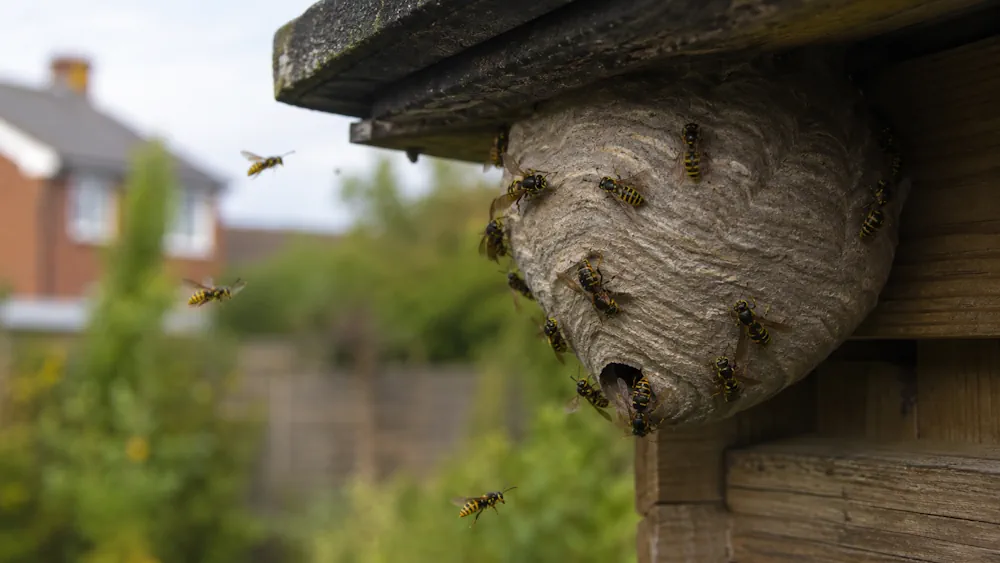
A few wasps drifting round the garden on a warm afternoon are completely normal and rarely worth worrying about. It becomes a different story if you notice a steady stream of wasps flying in and out of one spot, such as a roof void, air brick, or gap in the brickwork. That pattern usually means an active nest close by, and disturbing it yourself, particularly late in the season when workers are irritable and food-driven, carries real risk. Nests built in wall cavities, lofts, or anywhere near a door or window need proper assessment before anyone attempts to remove them.
What actually helps
Sealing gaps around windows, doors, and air bricks reduces the number of spots available for a queen to start a nest in spring. Keeping bins closed, rinsing recycling, and covering compost all reduce the food sources that draw wasps towards your home in the first place. If a nest is already established, professional treatment removes the colony. It stops workers scattering into your house or a neighbour’s garden, which can happen when a nest is disturbed without the right equipment. A trained pest technician can also confirm whether you’re dealing with common wasps, German wasps, or another species entirely, since treatment and risk levels vary between them.
This summer’s wasp numbers come down to a warm spring, a dry season, and the usual late-summer shift in colony behaviour, not some unexplained plague. Once you know what’s driving it, dealing with a nest becomes a lot less daunting.