What Is the Best Way to Get Rid of Slugs?
Slugs. Every gardener knows the misery of finding their hostas shredded overnight or their seedlings demolished before they even had a chance. The good news is that getting rid of slugs is entirely achievable, and you do not need to drench your garden in chemicals to do it.
Understanding Why Slugs Are in Your Garden
Slugs thrive in damp, cool conditions. They hide during the day under stones, plant pots, decaying wood, and dense ground cover. At night, they emerge to feed. If your garden holds moisture well and offers plenty of hiding spots, you are essentially running a five-star slug hotel.
The first step is to make your garden less inviting. Clear away debris, lift pots regularly, and avoid overwatering. Water your garden in the morning rather than the evening so the soil dries out before slugs become active.
Physical Barriers That Actually Work
Copper tape is one of the most reliable non-toxic deterrents available. Slugs receive a mild electrical charge when they cross copper, which stops them in their tracks. Wrap it around raised beds and individual pots for best results.
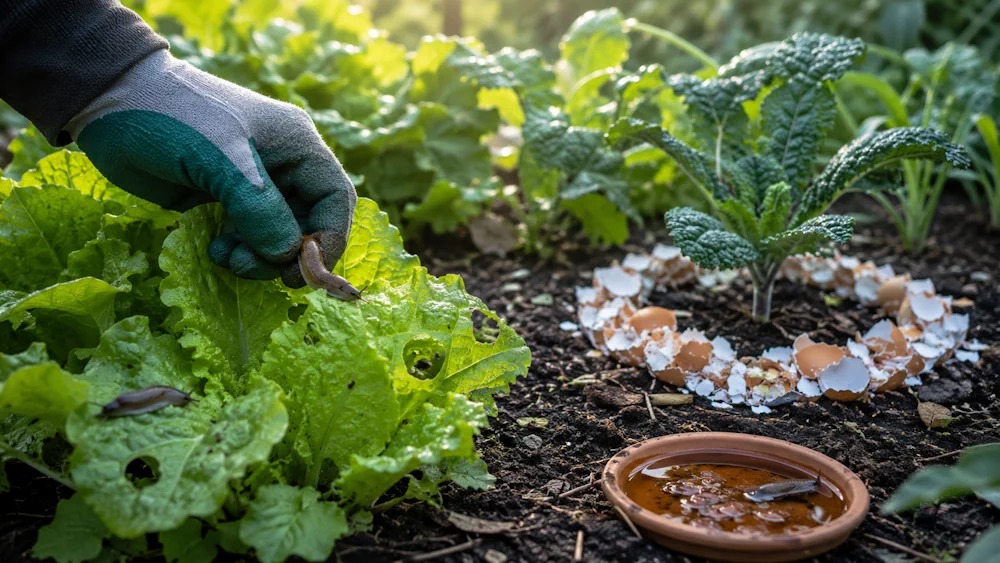
Crushed eggshells, sharp grit, and horticultural sand create rough surfaces that slugs find uncomfortable to cross. Lay these materials in a thick band around vulnerable plants. Refresh them after rain, as wet grit loses much of its effectiveness.
Wool pellets are another excellent option. They absorb moisture, swell up and create a scratchy mat that slugs will not cross. They also break down into the soil over time, adding nutrients as they go.
Beer Traps: Simple and Effective
Bury a container so the rim sits at soil level, fill it halfway with cheap beer, and leave it overnight. Slugs are drawn to the yeast, fall in, and cannot get out. Empty and refill every couple of days. It is low-cost, chemical-free, and genuinely effective at reducing local populations.
Encouraging Natural Predators
Hedgehogs, frogs, toads, slow worms, ground beetles, and song thrushes all feed on slugs. Attracting these creatures is one of the most sustainable long-term solutions available to any gardener.
Build a small log pile, install a hedgehog house, or add a pond to your garden. Even a shallow dish of water will attract frogs. Avoid using any pesticides that might harm these animals, because once you lose your natural predators, slug populations spiral quickly.
Nematodes: The Scientific Approach
Phasmarhabditis hermaphrodita is a microscopic nematode sold specifically to control slugs. You water it into moist soil, and it infects and kills slugs underground. It works particularly well from spring through to early autumn when soil temperatures are above five degrees Celsius.
Nematodes are safe for children, pets, wildlife, and plants. They do not harm earthworms or any beneficial insects. Results become visible within two to three weeks of application.
Slug Pellets: What You Need to Know
Ferric phosphate pellets are the safest chemical option. Unlike older metaldehyde-based pellets, which were banned in the UK in 2022, ferric phosphate breaks down into iron and phosphate. Both are naturally occurring in soil. They are safe to use around pets and wildlife when applied correctly.
Use them sparingly and only as a last resort. Scatter a thin layer rather than piling them up, and never leave them near ponds or waterways.
The Plants Slugs Hate
Prevention is far easier than a cure. Slugs actively avoid plants with strong scents or tough textures. Lavender, rosemary, astrantia, fennel, foxglove, and Japanese anemone are all naturally resistant. Planting these as borders around more vulnerable specimens reduces slug pressure.
Switching to slug-resistant varieties of hostas, such as Hosta ‘Halcyon’ or Hosta ‘Blue Mouse Ears’, is a smart move for any gardener who refuses to give up on these plants.
A combination of barriers, predators, traps, and resistant planting will reduce slug damage. No single method works perfectly in isolation, but together they create a garden that slugs simply do not want to be in.