Can I Get Rid of Bed Bugs Without an Exterminator?
Yes, you can. It is difficult, time-consuming, and demands total commitment, but a DIY bed bug treatment absolutely can work if you approach it correctly and follow through without cutting corners. Half-measures will fail every single time. Bed bugs are extraordinarily resilient creatures, and they will exploit any gap in your treatment plan.
Before anything else, confirm you actually have bed bugs. Misidentification wastes weeks of effort. Adult bed bugs are oval, flat, and roughly the size of an apple seed. They are reddish-brown and swell noticeably after feeding. Look for dark rust-coloured spots on your mattress seams and headboard. These are faecal marks. You may also find shed skins, tiny white eggs, or bloodstains on your sheets from where bugs have been crushed during sleep.
Strip and Treat Every Item of Bedding Immediately
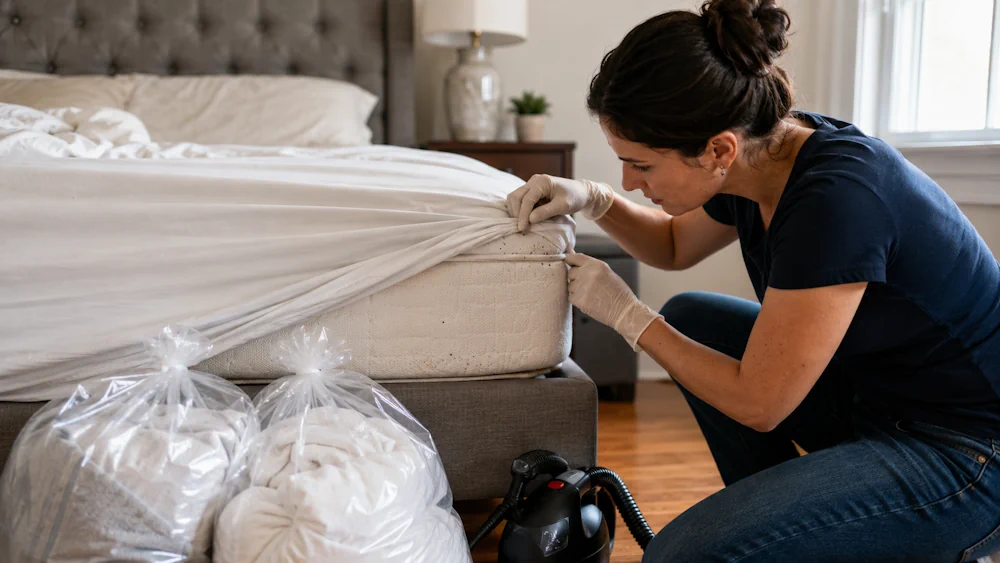
Remove all sheets, pillowcases, duvet covers, and mattress protectors when you suspect an infestation. Place them directly into sealed plastic bags before carrying them through the house. This prevents dropping bugs or eggs along the way.
Wash everything at a minimum of 60 degrees Celsius. Then tumble dry on the highest heat setting for at least 30 minutes. Heat is one of the most reliable killers. Bed bugs die at 48 degrees Celsius and above. Their eggs require sustained heat to be destroyed.
Anything that cannot go in the washing machine, such as cushions, soft toys, or delicate fabrics, should go into the tumble dryer on high heat for 45 to 60 minutes instead.
Vacuum Every Surface Thoroughly and Repeatedly
Use a vacuum cleaner with strong suction and a crevice attachment. Work it along every seam of your mattress, every joint of your bed frame, behind the headboard, along skirting boards, inside wardrobes, along carpet edges, and behind electrical sockets. Bed bugs hide in the thinnest of gaps, often as narrow as a credit card.
After each session, remove the vacuum bag immediately, seal it inside a plastic bag, and place it in an outdoor bin. If you have a bagless vacuum, empty the canister into a sealed bag outside and clean it with hot water.
Vacuum daily during active treatment. Consistency matters enormously here.
Use a Steam Cleaner Across All Infected Surfaces
A good steam cleaner with temperatures above 120 degrees Celsius at the nozzle kills bed bugs and eggs on contact. Move it slowly across your mattress, paying careful attention to seams, folds, and tufted areas. Steam the bed frame thoroughly, including screw holes and joints where bed bugs commonly shelter.
Steam your carpets, curtain hems, and any upholstered furniture in the room. Do not rush this process. Moving the nozzle too quickly allows the surface temperature to drop before the bugs are reached. Keep a slow, deliberate pace.
Allow surfaces to dry fully before putting bedding back. Damp mattresses create new problems.
Apply Diatomaceous Earth Strategically
Food-grade diatomaceous earth (DE) is one of the most effective non-toxic treatments available without professional help. It consists of microscopic fossilised algae with razor-sharp edges that cut through the waxy outer shell of a bed bug, causing it to dehydrate and die within a few days of contact.
Apply a fine, thin layer along skirting boards, behind the headboard, inside bed frame joints, along carpet edges, and around the legs of your bed. Do not pile it on thickly. A light dust is far more effective because bed bugs walk through it rather than around it.
Leave diatomaceous earth in place for at least 72 hours, though longer application periods produce better results. Reapply after vacuuming or steaming sessions.
Wear a dust mask when applying DE. Avoid inhaling any fine dust.
Encase Your Mattress and Box Spring
Purchase high-quality, fully encasing mattress covers specifically designed for bed bug protection. These are different from standard mattress protectors. A proper bed bug encasement zips completely around the mattress with a fine-toothed, bug-proof zip closure.
Any bed bugs trapped inside will die within 12 to 18 months as they cannot feed, breed, or escape. Any bugs attempting to climb up from below cannot penetrate the encasement to reach you. This cuts off one of the infestation points.
Encase your box spring as well. Box springs are notoriously difficult to treat and provide ideal harbouring conditions for large bug populations.
Use Contact Sprays and Residual Insecticides
Several insecticide sprays are sold legally in the UK for DIY bed bug treatment. Look for products containing cypermethrin or permethrin as active ingredients. These kill bugs on contact and leave a residual effect on treated surfaces for several weeks.
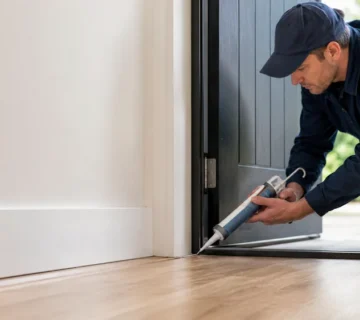
Spray along skirting boards, bed frame joints, behind headboards, inside wardrobe cracks, and along carpet edges. Never spray directly onto your mattress sleeping surface. Treat the mattress seams, not the area you sleep on.
Interceptor traps placed under each leg of the bed catch bugs travelling to and from the mattress. They also give you a clear indication of whether your treatment is working, as bug numbers in the traps should fall progressively over time.
Control the Temperature in the Room
Cold can kill bed bugs, too, though it takes far longer than heat. Placing infested items in a sealed bag in a domestic freezer set to minus 18 degrees Celsius for at least four days kills bugs and eggs. Smaller items like books, picture frames, and electronic accessories that cannot be washed or steamed can go through this process instead.
Portable heat treatment units are available to hire in the UK. These raise the entire room temperature to levels lethal to bed bugs across every surface simultaneously. Hiring one is considerably cheaper than a professional exterminator and can be highly effective when used correctly, provided you follow the equipment instructions precisely.
How Long Does DIY Treatment Take?
Realistically, plan for eight to twelve weeks of active treatment to clear a bed bug infestation without professional help. The egg-to-adult cycle runs approximately six to eight weeks, which means you must sustain your treatment efforts long enough to catch every emerging generation before they can reproduce again.
Treat the room weekly. Vacuum every two to three days. Re-steam every week. Monitor your interceptor traps. Do not move bedding or clothing between rooms without checking them first, as this is one of the primary ways infestations spread through a property.
When to Accept That Professional Help Is Needed
DIY treatment works best on contained, early-stage infestations in one or two rooms. If bed bugs have spread across multiple rooms, penetrated wall cavities, or persisted after eight weeks of consistent treatment, professional bed bug removal intervention becomes the more practical and ultimately cheaper option. A large, established infestation requires the kind of whole-property heat treatment or professional-grade pesticide application that simply falls outside what any DIY approach can deliver.
Act fast, stay disciplined, and work through every step without skipping. That is the difference between a successful DIY clearance and a problem that drags on for months.